Shibui: Why "Boring" is the New Beautiful in Zen Design
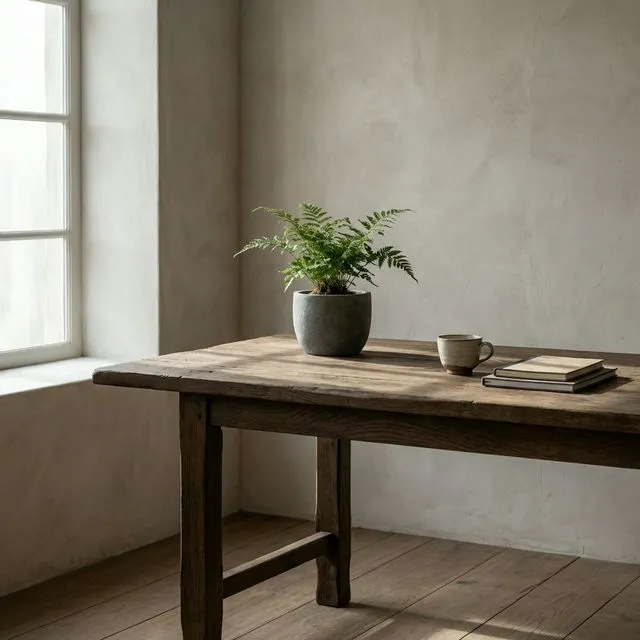
I had a client last week who aimed for “peace” but bought a neon-lit, self-watering, levitating planter. She asked me why her desk still felt like a nightclub.
I told her the truth: You are drowning in “loud” design.
Your eyes are tired. You build a workspace to focus, but you fill it with things that scream for attention: a bright white pot, a flowering orchid, a polished crystal.
You aren’t finding peace. You’re just managing visual noise.
The Cognitive Tax of “More”
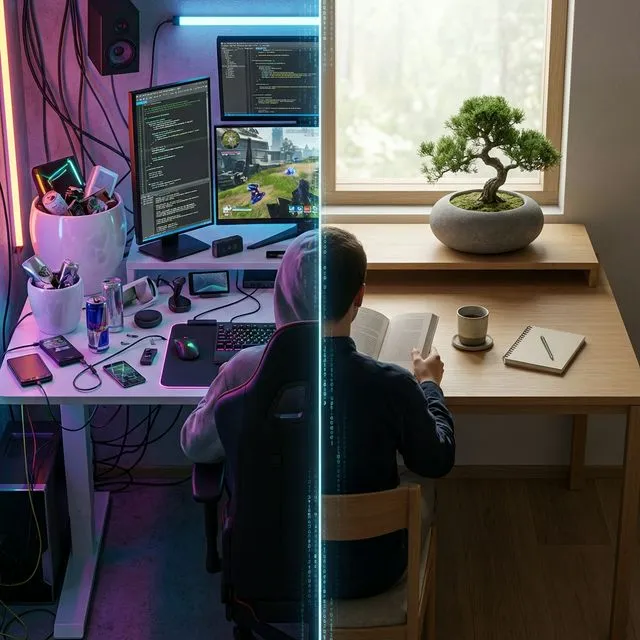
This relentless pursuit of “pop” isn’t just ugly; it’s a cognitive tax. Every shiny object in your peripheral vision reflects light and demands a micro-moment of processing power. That “perfect” glossy setup you saw on Pinterest isn’t a sanctuary; it’s a showroom. It requires constant dusting, constant pruning, and constant energy to maintain the illusion of perfection.
Is your sanctuary actually recharging you? Or is it just another chore?
Enter Shibui: The Art of Being Boring
The antidote is Shibui design.
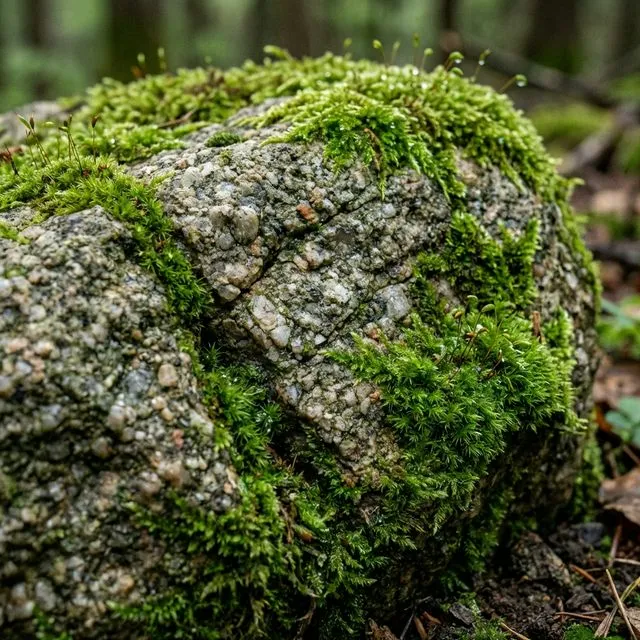
Shibui (adjective) is the Japanese concept of beauty that is simple, unobtrusive, and un-obviously profound. It’s the moss-covered stone, not the diamond. It’s the understated elegance of a clay pot that absorbs light rather than bouncing it back at you.
It doesn’t shout. It doesn’t need to. And that is exactly why it belongs on your desk in 2026.
What is Shibui Style? (The “Stop” Button)
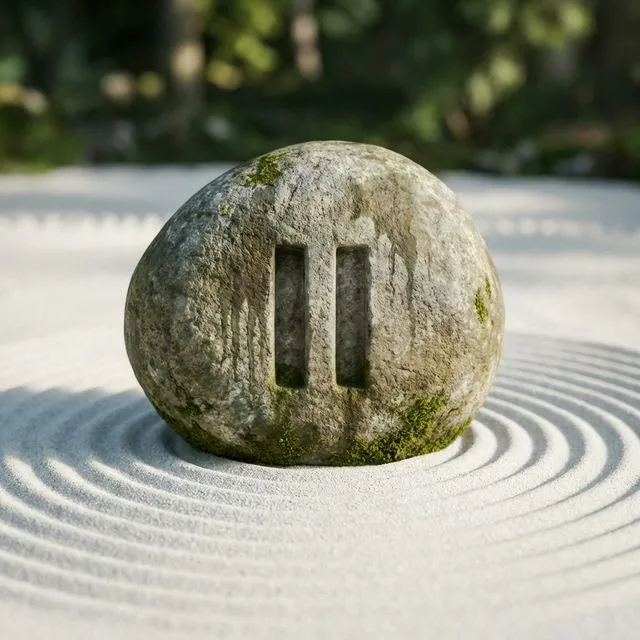
At its core, Shibui is the art of knowing when to stop. It champions the matte texture over the shiny, the muted over the bright, and the useful over the merely decorative.
Historically, the concept was crystallized by Yanagi Soetsu, father of the Mingei (folk craft) movement. In his seminal work The Unknown Craftsman, Yanagi described Shibui as the “beauty of inner implications”—beauty that is not displayed but discovered1.
Unlike Wabi-Sabi The Art of Wabi-Sabi, which focuses on the imperfect (the crack in the cup), Shibui focuses on the object’s quiet confidence. A Shibui object is honest. It implies an internal depth that doesn’t need a billboard.
The Shibui Audit: Look at your Zen garden The Sonic Sanctuary. If an object reflects light (like a glazed pot or a glass bead), it is likely not Shibui. If it absorbs light (like iron, wood, or stone), it is.
2. The Material Guide: Choosing the Unobtrusive
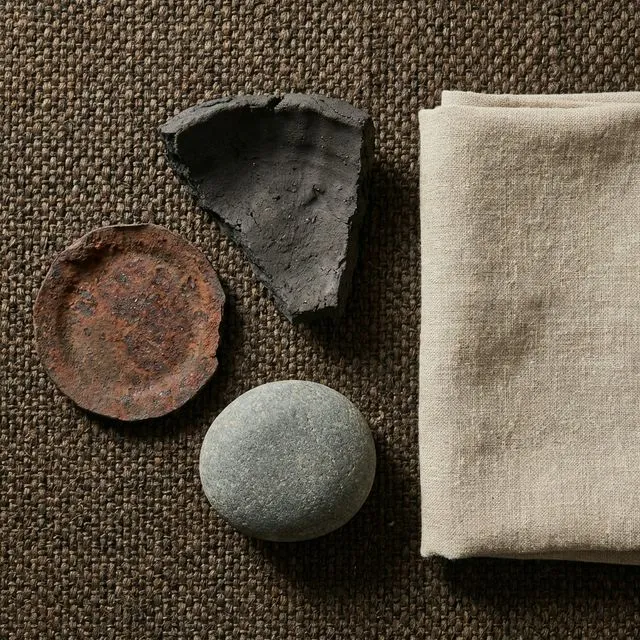
To get this look, you have to be rigorous. We are moving away from the “plastic perfection” of modern manufacturing. We want things that feel real The Resilient Sanctuary.
Unglazed Ceramic Pots: The Foundation
The hallmark of Shibui is the unglazed ceramic pot. When clay is fired without a glass-like glaze, it retains a rough, sandy texture that feels grounded. Clay planters—specifically those in terracotta, grey slate, or darkened earthenware—allow the focus to remain on the plant.
Matte black planters are a classic choice; they recede visually, becoming a void that frames the greenery without competing with it.
Cast Iron and Concrete: The Weight
For hardscaping, burn the polished marble. Look for Zen garden materials that carry weight.
- Cast Iron: A small, rusted iron lantern (
tōrō) implies permanence. (> Pro Tip: Seal rusted iron with a matte clear coat to prevent staining your desk). - Concrete: Porous, weather-beaten concrete that looks like stone.
The Shibui Color Palette
The Shibui color palette is famously “muddy.” It draws from the colors of the swamp, the forest floor, and the overcast sky.
- Yes: Sage green, charcoal grey, mud brown, iron rust, tea-stain beige.
- No: Neons, primary blues, pure whites, golds.
3. Plant Selection: Silence the Flowers
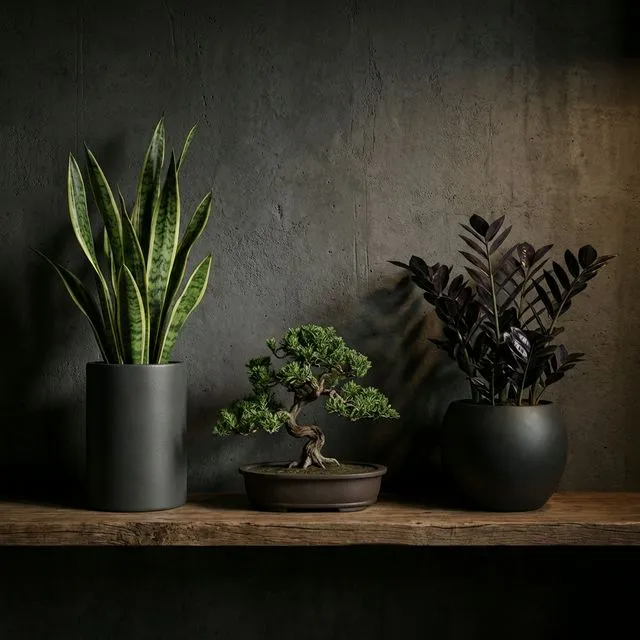
Flowers are flashy. They shout. Shibui whispers.
If you want a true Shibui space, stop buying orchids. The drama should come from leaf shape, texture, and variegation.
- Snake Plants (Sansevieria): Sculptural and vertical.
- Juniper Bonsai: The rough bark contrasts with the soft needles.
- ZZ ‘Raven’ (Zamioculcas zamiifolia): The ultimate “Goth Plant.” Its leaves are a glossy, near-black purple that fades into the shadows.
Case Study: The “Flashy” vs. The “Shibui” Desk
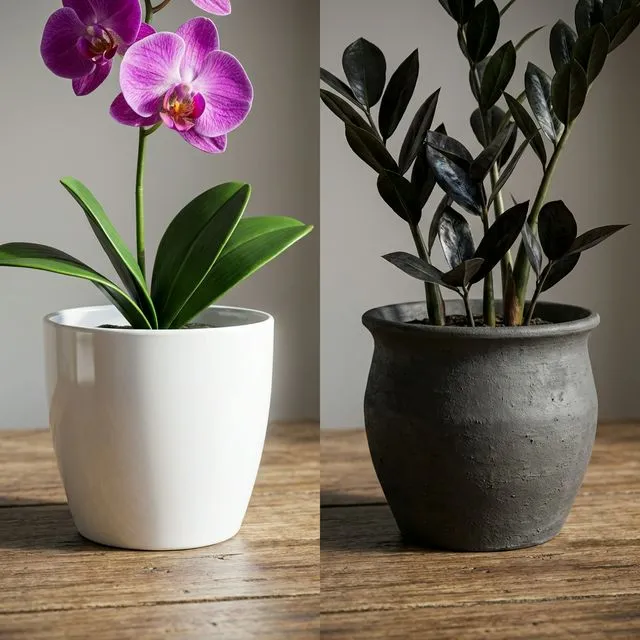
Let’s be entirely clear.
| Feature | The “Flashy” Approach | The “Shibui” Approach |
|---|---|---|
| Container | White glossy ceramic pot | Shallow unglazed ceramic pot (Charcoal) |
| Plant | Bright purple Orchid | ZZ ‘Raven’ (Black-Purple Foliage) |
| Accent | Polished white river stones | Single, jagged granite rock |
| Feeling | ”Look at me!" | "I am here.” |
The Final Take
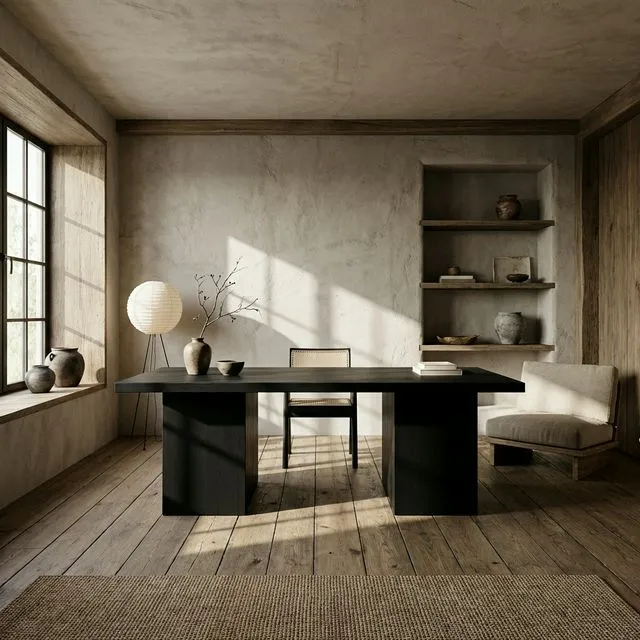
In 2026, as trends like “Quiet Luxury” and “Japandi” rise, Shibui stands as the grandfather of them all. It teaches us that true authority doesn’t need to shout.
By choosing matte textures, clay planters, and a restrained palette, you aren’t just decorating; you are creating a sanctuary that respects your attention span. In a world of constant noise, the quietest object in the room is often the most powerful.
Footnotes
-
Yanagi, Soetsu. The Unknown Craftsman: A Japanese Insight into Beauty. Kodansha International, 1972. ↩