The Submersive Sanctuary: Zen Aquascaping and The Art of "Iwagumi"
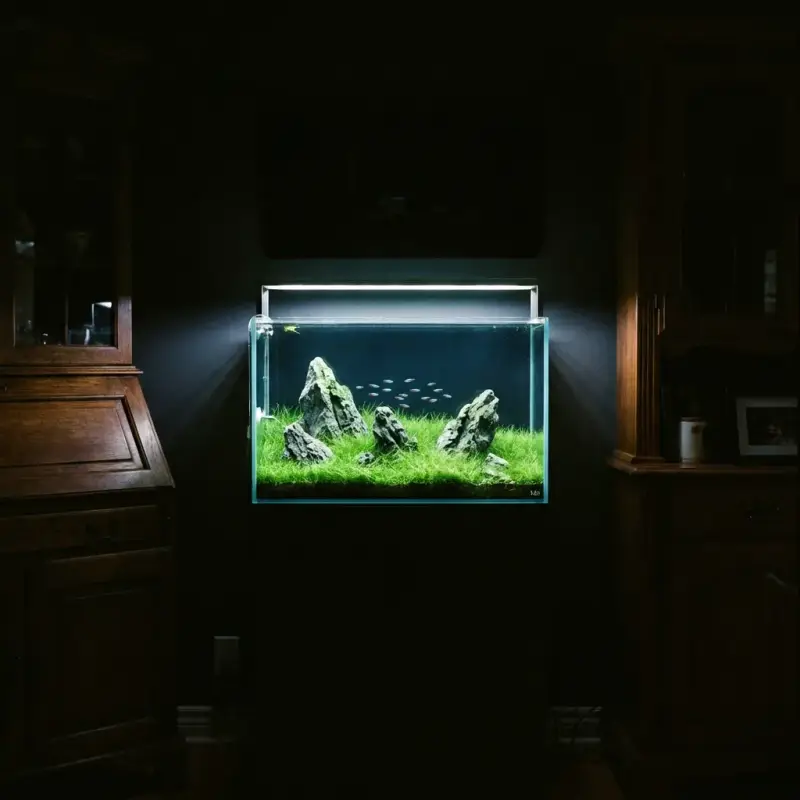
Beyond the “Fish Tank”: The Nature Aquarium
Forget the bubbling treasure chests and neon gravel of the 1990s. The modern Nature Aquarium is a discipline of fine art, pioneered by the late Takashi Amano. It does not exist to display fish; the fish are merely guests. It exists to display the balance of an ecosystem.
In a high-stress urban environment, an Iwagumi tank serves as a Biophilic TV. Research from the University of Exeter suggests that watching the rhythmic movement of fish in a planted tank can significantly reduce heart rate and improve mood 1, creating a flow state similar to deep meditation.
The Design Philosophy: Iwagumi (Rock Formation)
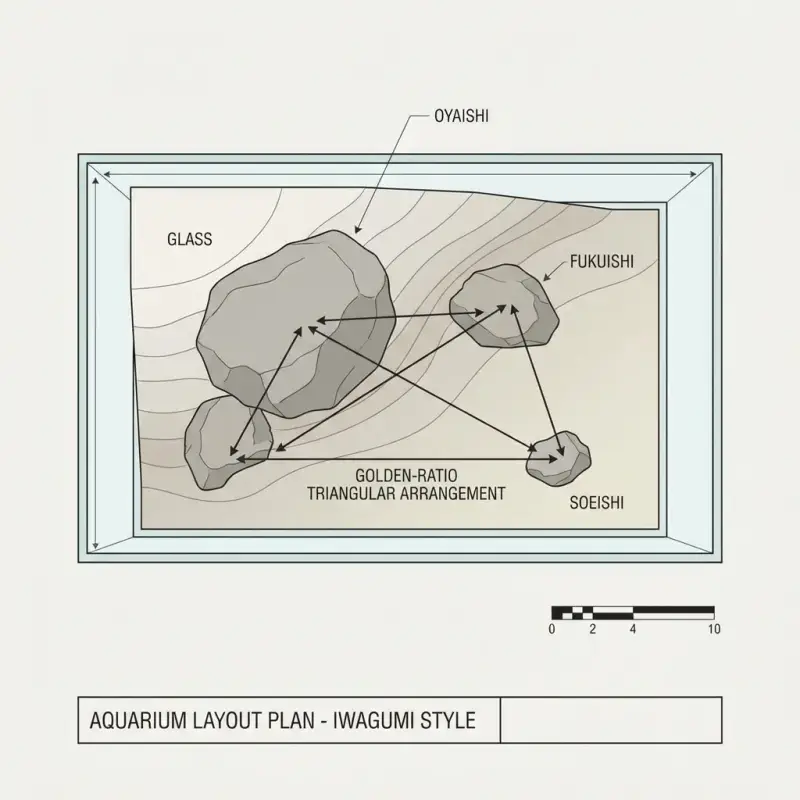
Iwagumi is the direct aquatic translation of the dry Zen garden. It follows strict rules of odd numbers and asymmetry.
The Sanzon-Iwagumi (Three-Pillar) Layout
The classic formation uses three stones, representing a Buddhist triad:
- Oyaishi (The Father Stone): The largest, dominant rock. It is placed off-center, leaning slightly into the “flow” of the water. It dictates the entire atmosphere.
- Fukuishi (The Secondary Stone): Placed in support of the Oyaishi, creating tension and balance.
- Soeishi (The Tertiary Stone): A smaller accent stone that grounds the formation.
The Tech Layer: High-Energy Systems
Unlike a terrestrial garden, an underwater garden is a life-support system. To achieve the lush, “impossible green” of a competition-level tank, we use High-Tech Life Support.
- Invisible Glass: We use low-iron, “Opti-White” glass with no plastic rim. The surface of the water becomes the only boundary.
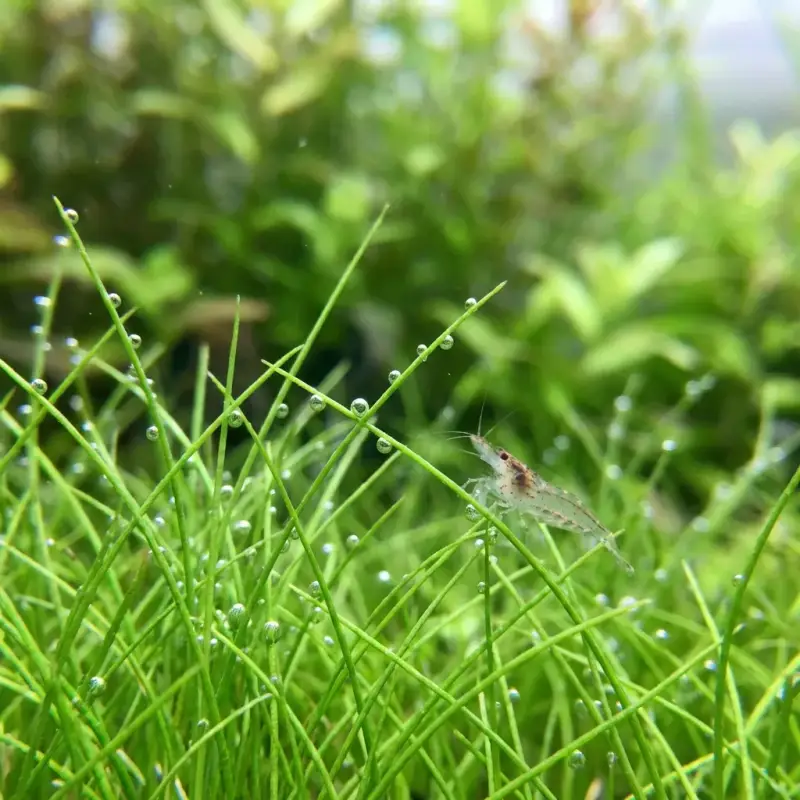
- CO2 Injection: Pressurized carbon dioxide is diffused into the water in microscopic bubbles. This supercharges photosynthesis, causing the plants to release visible oxygen trails—a phenomenon called “Pearling”. Watching your garden breathe is the ultimate mindfulness trigger.
- Full-Spectrum LED: Smart lights mimic the 6500K spectrum of the midday sun at noon and fade to a deep blue moonlight at night, regulating the circadian rhythm of both the tank and the viewer.
Plant Palette: The Living Carpet
In Iwagumi, we do not use “stem plants” that clutter the view. We use Carpeting Plants that form a seamless, velvet lawn underwater.
- Monte Carlo (Micranthemum tweediei): The standard for 2026. It cascades over rocks like a slow-motion waterfall.
- Dwarf Baby Tears (Hemianthus callitrichoides): The smallest aquarium plant in the world. It requires high light and CO2 but creates a sense of immense scale, making a 20-gallon tank look like a rolling hillside.
- Dwarf Hairgrass (Eleocharis acicularis): Moves gently with the current, mimicking a wind-swept meadow.
Hardscaping: Seiryu and Dragon Stone
The choice of stone defines the mood.
- Seiryu Stone: Grey, jagged limestone with white calcite veins. It mimics miniature mountain peaks. It raises the water hardness/pH slightly.
- Dragon Stone (Ohko Stone): Clay-like, warm brown, and full of craters. It looks like ancient, weathered cliffs. It is inert and does not affect water chemistry.
Maintenance as Meditation
The Iwagumi garden is not set-and-forget. It requires the Weekly Water Change—a ritual of siphoning 30% of the water and trimming the “lawn” with surgical scissors.
For the Zen practitioner, this is not a chore. It is Samu (work practice). The act of manicuring a meadow that lives inside a glass box focuses the mind completely on the present moment.
Conclusion: The Universe in a Cube
The Submersive Sanctuary captures the vastness of nature in a finite container. It brings the mountain, the meadow, and the river into the smallest apartment.
In 2026, when the outside world feels chaotic and loud, the silence of the underwater garden is deafening. It is a world where gravity is defied, and peace is liquid.