Shizen: Drop the Blue Sand and Build a Zen Garden That Actually Works
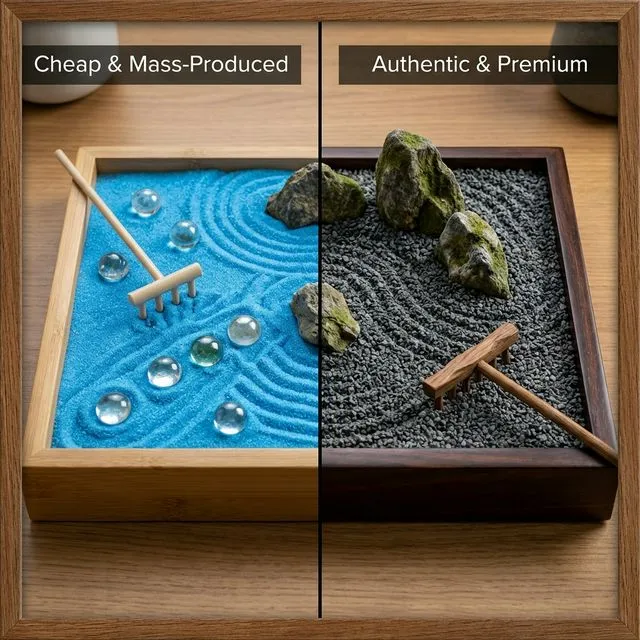
Let’s confront reality. You bought one of those “Zen garden” kits online—you know, the ones with a flimsy bamboo tray, a rake that bends if you look at it too hard, dyed neon blue sand, and perfectly symmetrical glass marbles. You set it on your desk, played with it for five minutes, and now it sits there looking like a spilled aquarium.
It’s not just ugly. It’s fundamentally broken.
These mass-produced kits fail because they totally ignore the core principles of genuine Japanese dry gardens (Karesansui). They try to package “mindfulness” using materials that induce anxiety. If we’re going to fix this, we need to talk about Shizen—the Japanese aesthetic principle of naturalness—and why using natural zen garden materials instead of plastic toys is vastly superior.
Pro Tip: Don’t toss the bamboo tray just yet. Even that cheap pine box can be sanded down and rubbed with linseed oil to serve as a decent base for a real Karesansui.
The Principle of Shizen (Naturalness)
Look, in the West, we have this weird idea that “natural” means wild and untouched. We think a garden isn’t natural unless it looks like an unkempt jungle.
The Shizen design principle completely flips that. Shizen understands that human intention is part of nature. If you look at Shizen design principle examples across traditional Japanese architecture, you’ll see it everywhere: taking raw, unpolished materials and subjecting them to intense, disciplined human design.
When you use spherical glass beads or that infuriating “moon sand,” you’re fighting the very geology of the earth. Those materials don’t exist outside a factory. They lack the grit, the weight, and the patina of time you desperately need to anchor a distracted mind. Want proof? Look at the aesthetic of Shibui. Neon pink sand screams for your attention—it’s an obnoxious focal point. Shizen demands earth tones. Grays, muted whites, charcoal blacks. These reduce your cognitive load instead of adding to it.
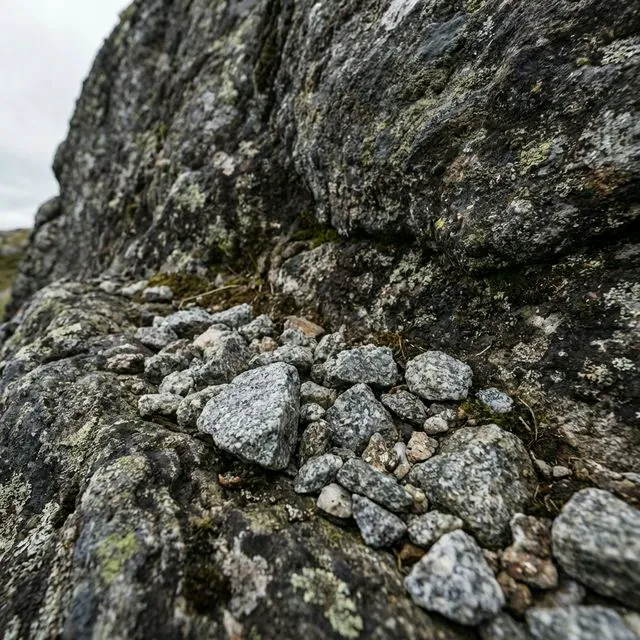
Zen Garden Sand Alternatives: The Physics of Raking
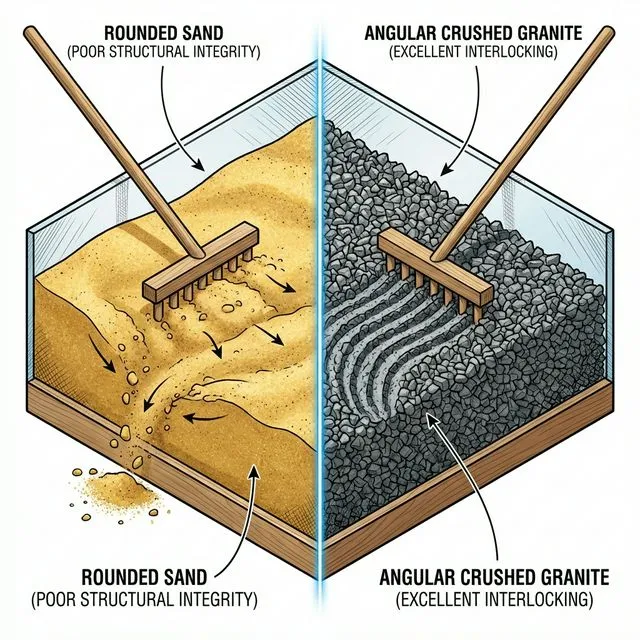
This is where the cheap kits truly fail. The sweeping, raked lines of a Zen garden aren’t just decorative swiggles. They capture the abstract essence of moving water—a roaring river, or violent currents smashing against an island.
Why “True Sand” and Moon Sand Fail
I see dozens of DIY guides telling people to use beach sand, playground sand, or kinetic moon sand as zen garden sand alternatives. Please stop doing this.
True sand has been rounded by centuries of erosion. It’s too soft. When you drag a miniature rake through it, the sand doesn’t have the shear strength to hold a ridge. The walls instantly slump. Your beautiful pattern collapses the second you bump your desk. (Nothing ruins a “flow state” faster than watching your work instantly disintegrate). And moon sand? It’s just sticky mush. It can’t hold the sharp, high-contrast shadows required for this style of gardening.
The Best Sand for Desktop Zen Garden Upgrades
Here’s a secret about finding the best sand for desktop zen garden kits: authentic Karesansui layouts—like Kyoto’s famous Ryōan-ji—don’t even use sand at all. They use Shirakawa gravel, which is heavily crushed, highly angular granite.1
If you need a realistic Shirakawa-suna sand alternative, you can replicate this on a budget. Go to a rural supply store and buy crushed granite or poultry grit (often sold as “Turkey Grit”). Yes, I’m telling you to put chicken gravel on your desk. Why? Because it’s literally crushed stone with sharp, angular edges. When you rake it, these jagged edges physically lock together. They hold their shape against vibrations and cast incredibly dramatic shadows. It is the only choice for an authentic Japanese garden style desk setup.
Comparing Base Materials
| Material Type | Structural Integrity (Raking) | Aesthetic Suitability (Shizen) | Cost & Accessibility |
|---|---|---|---|
| Dyed Craft Sand | Terrible. Slumps instantly. | Zero. Obnoxious neon colors. | Dirt cheap. Everywhere. |
| Glass Beads | Zero friction. You can’t rake them. | Zero. Unnaturally symmetrical. | Comes with the bad kits. |
| Beach/Play Sand | Poor. Rounded grains collapse. | Low. Too yellow or brown. | Cheap. Hardware stores. |
| Aquarium Gravel | Decent. Holds fairly clean lines. | Good. Nice neutral tones. | Easy to find at pet stores. |
| Crushed Granite | Perfect. Jagged edges lock tight. | Excellent. Looks like the real deal. | Moderate. Farm supply stores. |
Natural Zen Garden Materials: Replacing the Glass Marbles
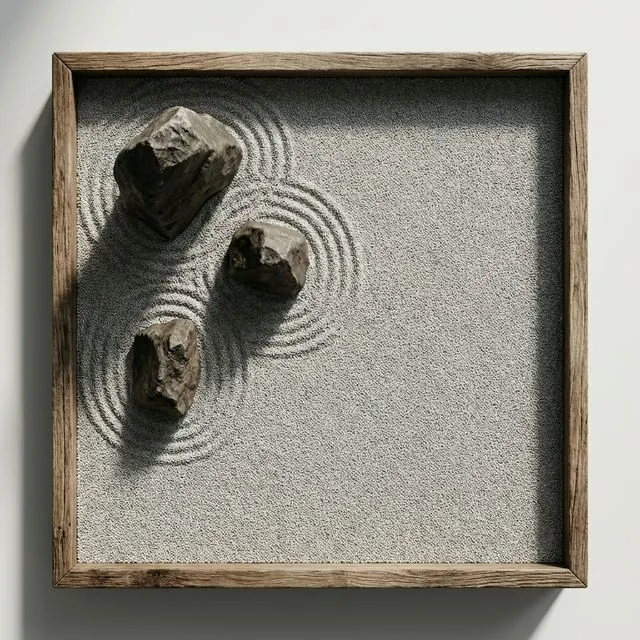
In a rock garden, stones are the anchors. They’re tectonic forces, towering mountains, or islands surviving an ocean storm.
The Ontological Weight of Rocks
Throw away the polished river stones. Toss the glass marbles. They look weak. Your garden needs the brutal, rough-hewn texture of raw granite or cracked limestone. This rugged ugliness is exactly what the philosophy of Wabi-Sabi is all about—finding profound, enduring beauty in scars and imperfections.
How to Arrange Rocks in a Zen Garden
Most tutorials tell you to lay your stones flat on top of the sand, spread out evenly. This makes my skin crawl. It’s functionally and aesthetically wrong.
- Bury the Base: A stone resting flat on the surface looks like a paperweight. Twist and sink at least a third of the stone’s mass beneath the gravel. (Keep scale in mind: since your bamboo tray is likely shallow, stick to 1 to 2-inch rocks so you can bury their bases without scraping bottom). Make it look like an immovable, subterranean mountain pushing up from the earth’s crust.
- Embrace Asymmetry: Never center anything. Never place things symmetrically. Use odd numbers—three, five, or seven rocks. A classic setup involves one massive, dominant rock (the mountain peak) flanked by two smaller, submissive stones. This deliberate imbalance forces your eyes to move.
- Master Negative Space: Leave huge empty patches of raked gravel. Don’t crowd the tray. To understand why this emptiness is powerful, read up on Mastering Ma (Negative Space).
Adding Greenery: Preserved Moss vs. Living Moss
Dry gardens are mostly geology, but a tiny hit of greenery adds needed warmth. Get rid of the plastic bonsai trees. Don’t use that fake, neon-green synthetic moss either.
Upgrade to preserved moss (like cushion moss). Now, I know what you’re thinking: “Why not use real, living moss?” Because keeping real moss alive in a dry, shallow, sandy tray on a temperature-controlled office desk is a total nightmare. You overwater it, and the muddy runoff ruins your expensive crushed granite. Preserved moss gives you the rich, organic texture of an ancient highland forest—without the ridiculous maintenance. It is the perfect finishing touch for your DIY zen garden kit upgrade while respecting the austerity of the whole design.
Foraging for Garden Rocks Legally
We all love the romantic idea of wandering into the wild to harvest the perfect, weathered stone. But foraging for garden rocks legally is actually pretty complicated. And honestly? A real practitioner of Zen design doesn’t rip apart a living ecosystem just to decorate their home office.
- National Parks: In the U.S., stealing geologic resources—even a single pebble—from a National Park is a federal crime.2 Just don’t.
- Beaches and Rivers: Digging up sand from local beaches straight-up contributes to coastal erosion and kills micro-habitats.3
- The Ethical Solution: Buy your stuff. It’s easier and cheaper. Farm supply stores sell a 50-pound bag of Turkey Grit for five bucks. Local residential landscaping yards will often sell you a tiny bucket of actual crushed granite or decomposed limestone. If you want pristine, washed gravel, the aquarium aisle at a pet store is your best friend.
Step-by-Step DIY Zen Garden Kit Upgrade
Ready to fix that tragic desktop kit? Here is exactly how you turn it into a functional micro-sanctuary.
- Clear the Canvas: Dump the dyed sand and plastic trash out of your bamboo tray. (If the tray itself is cracked, fix it with Kintsugi to give it some incredible golden scars).
- Wash the Dust Out: Farm supply grit is incredibly dusty straight out of the bag. Rinse your crushed granite in a bucket until the water runs clear, then let it dry completely before pouring it near your keyboard.
- Fill the Base: Pour in your clean, high-friction crushed granite or fine aquarium gravel. You need about a ½ inch depth so your rake lines can actually cast shadows.
- Anchor the Stones: Pick 3 or 5 unpolished, ugly rocks. Sink them deep into the gravel. Group them asymmetrically, way off-center.
- Introduce Biophilia: Wedge a small chunk of preserved cushion moss tight against the base of your biggest rock.
- Rake the Samon: Grab a sturdy wooden rake. Pull deep, steady lines (Samon, the Japanese term for raked sand ripples) around the rocks, simulating water breaking around an island.
Pro Tip: When you drag that rake, don’t stop halfway. Pull it in one continuous, fluid motion, and exhale slowly while you do it. That physical friction against the granite? That’s what actually triggers the psychological flow state.
Swap the cheap plastic for heavy, fractured, interlocking stone. You aren’t just making a prettier desk ornament—you’re building a tool that actually works.