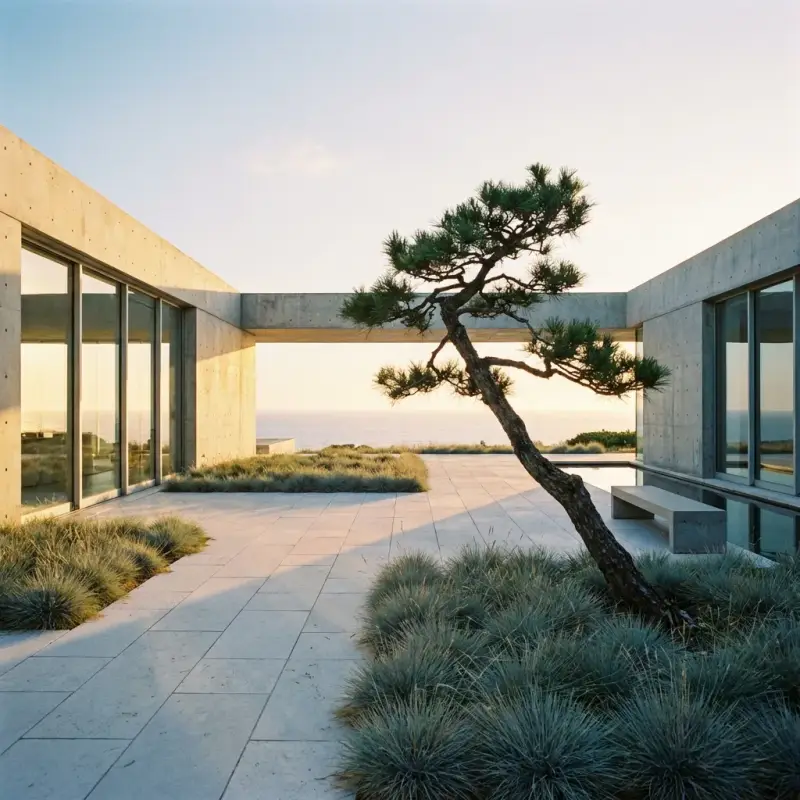
The Resilient Sanctuary: Engineering Climate-Adaptive Zen
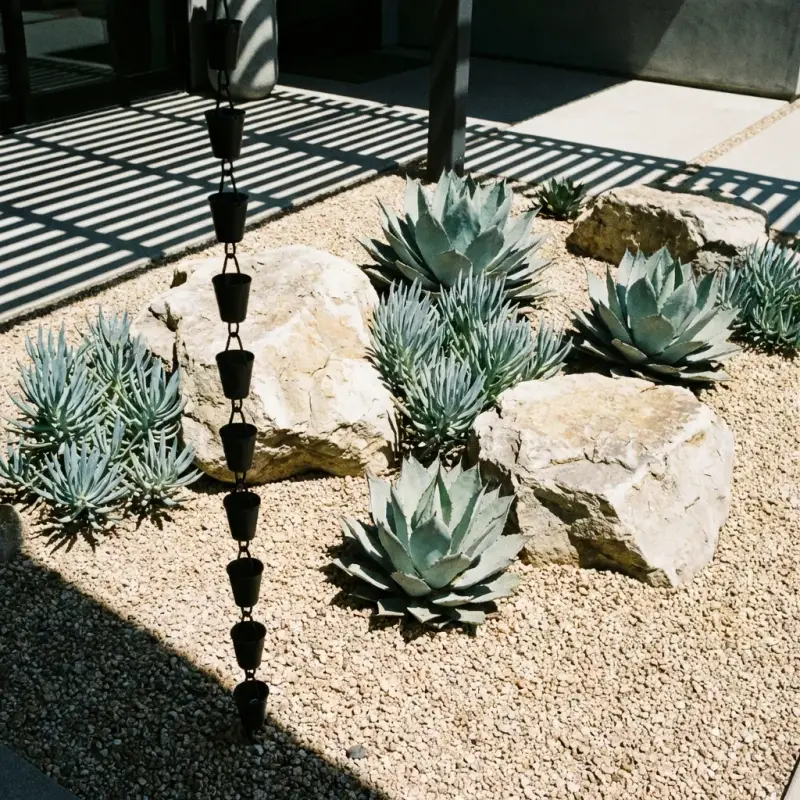
Forget the velvet mosses of Kyoto. If your idea of “peaceful” involves pumping hundreds of gallons of municipal water onto a patch of grass just to keep it from crisping up in July—you’re doing it wrong. That’s not a sanctuary. That’s a hostage situation.
In our fifteen years of designing residential sanctuaries at Zen Garden, the most common trap we see clients fall into is fighting the local climate. We’re bleeding dry trying to maintain an English lawn in an era of droughts and sudden heatwaves. It’s time to cut the cord and stop forcing nature to be what it isn’t—a concept heavily tied to the Japanese principle of naturalness, or Shizen.
True Wabi-Sabi isn’t just about admiring a cracked teacup. It’s about adapting to the brutal reality of what’s outside your window. We’ve shifted hard toward what we call Dry Zen. No, I don’t mean just chucking a cactus in a pot. I mean curating a deliberate palette of silver, sage, and stone that laughs at a heatwave—a design that lowers both your water bill and the visual noise of high maintenance.
The Problem With Concrete: Stop Baking Your Yard
Before we plant a single thing, we need to talk about grading and hardscaping.
Concrete is dead to me. Pour a solid concrete slab in a sunny yard and you’ve just built a thermal battery that cooks your space all night. Dark stones, like basalt, look moody and dramatic in a magazine, but in a real-world heatwave? They become radiators. Your garden is suddenly unusable past 6 PM.
If you don’t adapt your hardscaping, your plants will fry and every heavy rain will become a flash flood racing into the municipal drain instead of feeding your soil.
The Solution: Permeability and Hydro-Zoning
To build a sanctuary that survives, we have to engineer the environment to absorb water when it falls, and ration it when it doesn’t.
1. High-Albedo Permeable Pavement
Your patio needs to be a filter, not a dam.
- Bonded Gravel: We glue crushed granite together with a UV-stable resin binder. You get the crunch of loose stone, but it’s solid underfoot. Rain goes right through to the aquifer like pouring water through a sieve.
- Open-Joint Slate: Float massive, light-colored stone pavers—like beige limestone or travertine—on a bed of crushed aggregate. No mortar. This albedo shift (using light reflective colors) drops the micro-climate temperature by a solid five degrees, making the space habitable during peak summer.
2. Hydro-Zoning That Actually Works
Most “smart irrigation” setups are just dumb timers with WiFi. The early 2020s were littered with them. We need rigs that actually think.
I’m talking about Predictive Hydro-Intelligence. Systems like Rachio Gen 4+ or Hydrawise pulling data from hyper-local weather stations—literally the one mounted on your fence. If it’s about to rain, or if the evapotranspiration rates are off the charts, the system adapts. Right then.
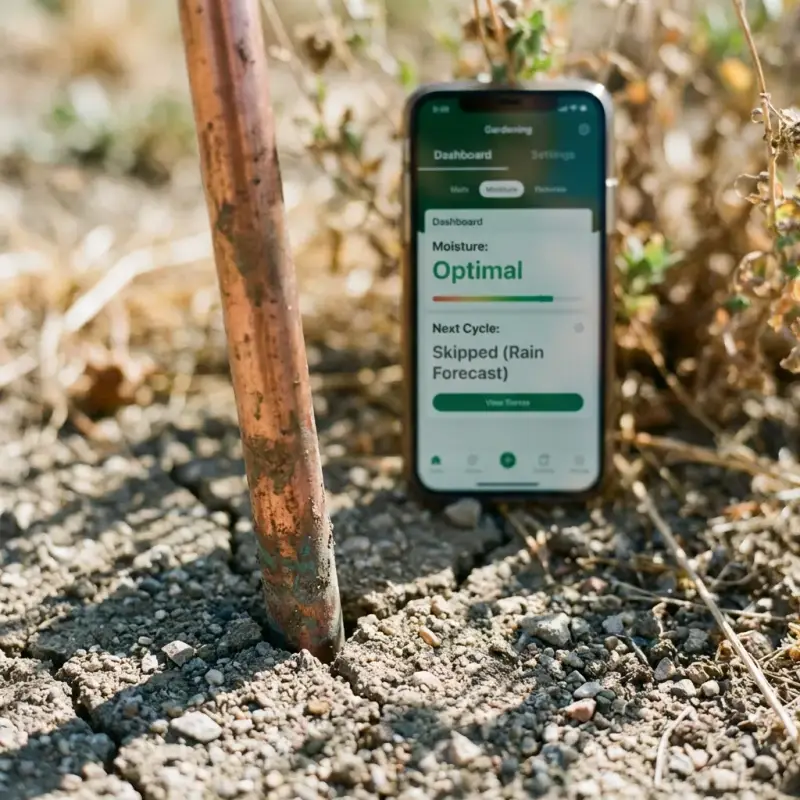
- Soil Capacitance Sensors: We bury ceramic sensors (Teralytic makes solid ones) six inches down. They read moisture tension and NPK levels. They tell the rig exactly when a plant is actually thirsty. Turns out, “over-loving” your plants kills more of them than a drought ever could. Who knew?
- Sub-Surface Drip: Stop spraying water into the air. It evaporates before it hits the dirt. Inject it directly to the root zone with capillary mats, achieving near-100% absorption efficiency.
The “Silver Zen” Plant Hit List
Drop the deep forest greens. We’re leaning hard into shimmering silvers—plants that evolved reflective coatings (trichomes) just to survive being baked alive. By selecting these, we achieve profound beauty without resource anxiety.
| Species | The Job | Toughness | Why It Works |
|---|---|---|---|
| Black Mondo Grass (Ophiopogon planiscapus) | Ground Cover | Moderate | Kicks moss to the curb. Deep, dramatic voids of negative space. |
| Blue Fescue (Festuca glauca) | Texture | High | Soft, geometric spheres. Handles the visual job of a fern without needing a swamp. |
| Japanese Black Pine (Pinus thunbergii) | Structure | Very High | The classic Zen anchor. Shrugs off salt, wind, and drought once established. |
| Agave ‘Blue Glow’ | Focal Point | Extreme | Living architectural geometry. A statement piece that thrives on neglect. |
The Modern Kusari-doi (Rain Chain)
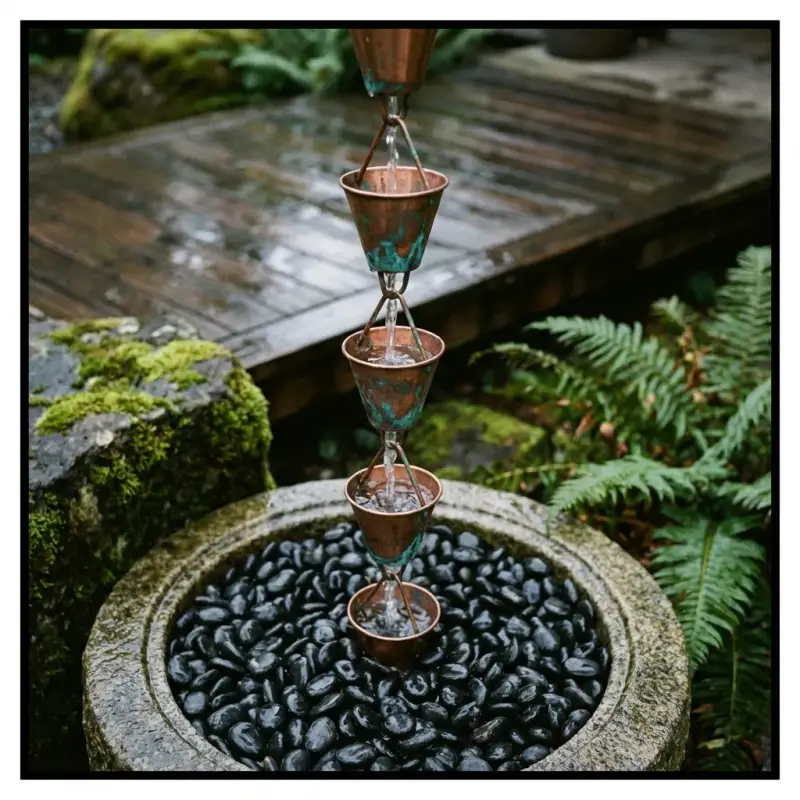
When you live somewhere hot and dry, rain isn’t an annoyance; it’s an event. Instead of hiding it in an ugly aluminum downspout, we expose it with a copper rain chain (Kusari-doi).
Homeowners almost always push back out of fear that a rain chain looks “unfinished” compared to standard, hidden seamless gutters. But wait until the first real storm hits. When a sheet of water travels down those copper links directly into a gravel basin—feeding the French drain that keeps a new black pine alive without flooding the patio—the argument ends.
It guides the runoff into the ground where it belongs. You actually get to watch your passive irrigation system work instead of reading about it in a brochure. This isn’t just pretty design; it’s survival.
Attachment causes suffering. That’s Zen 101. The second you let go of your desperate attachment to a lush, tropical oasis in the middle of a dry climate, you find something vastly better. A stoic, durable space that drinks exactly what it needs, stands firm when the temperature spikes, and actually lets you breathe.