The Neuro-Restorative Sanctuary: Ancient Wisdom Meets 2026 Neuroscience
The Problem: The Fraud of “Minimalism”
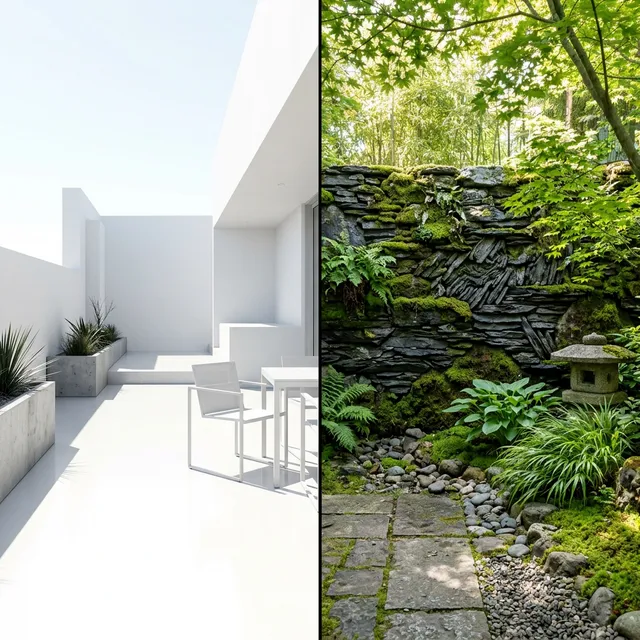
A photorealistic comparison highlighting the visual strain of a modern minimalist patio (left) versus the soothing effect of a textured, Japanese-inspired slate wall demonstrating fractal fluency (right).
Nature doesn’t do perfectly smooth concrete. It does fractals. Think repeating, self-similar patterns—the branching of an old oak, the frost on your windshield.
Our visual cortex evolved over millions of years to process these shapes on autopilot 1. But walk into one of those modern, slick, stark-white minimalist gardens? Your brain is desperately searching for visual anchors that aren’t there. It causes actual cognitive strain.
The Agitation: Fighting Your Own Biology
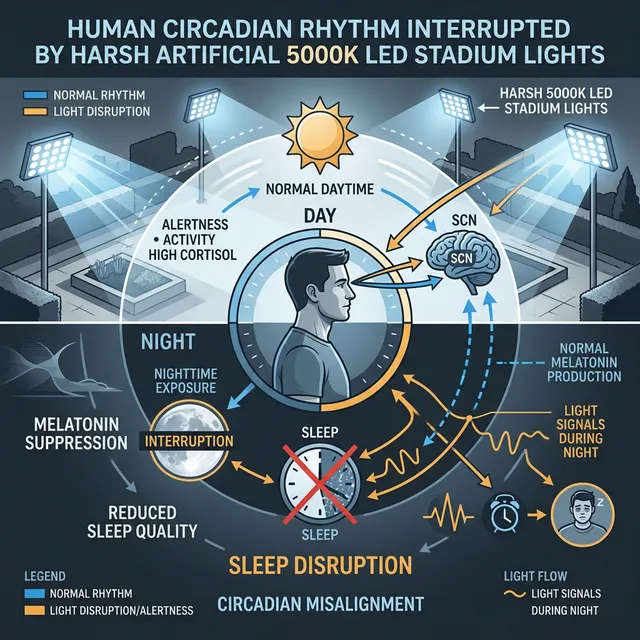
A schematic diagram depicting the disruption of the human circadian rhythm by harsh artificial 5000K LED stadium lights.
It gets worse when the sun goes down. Traditional designers revered Yugen—the subtle mystery found in deep shadows. Modern neuroscience confirms their instinct: deep darkness is non-negotiable for melatonin production 2.
If your yard is blasting you with 5000K LED stadium lights at 10 PM, you’re ruining your sleep architecture. You are actively fighting your own biology.
The Solution: The Neuro-Restorative Toolkit
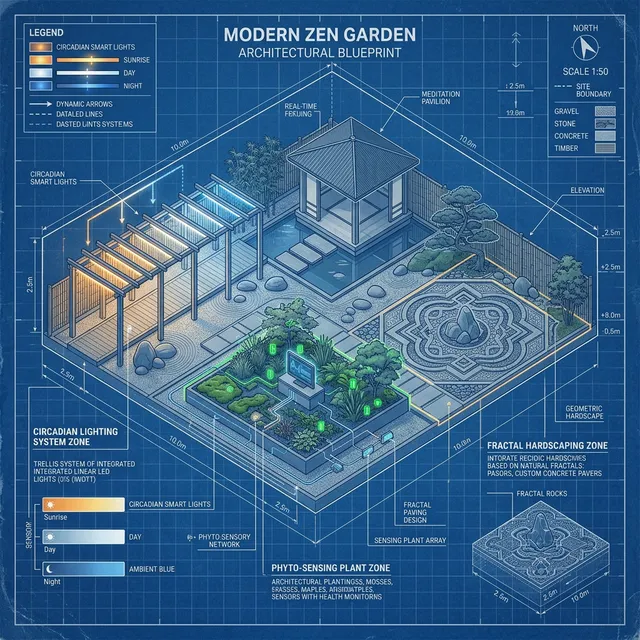
An isometric architectural blueprint of a modern Zen garden, detailing specific zones engineered for circadian lighting, phyto-sensing plants, and fractal hardscaping to maximize neurological benefits.
To fix this, we have to look past “vibes” and start engineering for the nervous system. We do this by reintroducing precise, biological triggers.
1. Natural Geometry (Fractals)
We’re bringing back math to hardscaping:
- The “Rough” Wall: Stacked slate. Every edge depth is different. It’s a 3-dimensionally fractal surface that your eyes can actually feast on—instead of sliding off polished concrete like a bad metaphor.
- The Path of Resistance: Stepping stones that are deliberately annoying. Irregular spacing forces “Cognitive Path-Finding.” You have to engage your proprioceptive senses (your body’s physical awareness in space) so you don’t trip. Grounding you right in the now, whether you want to be or not.
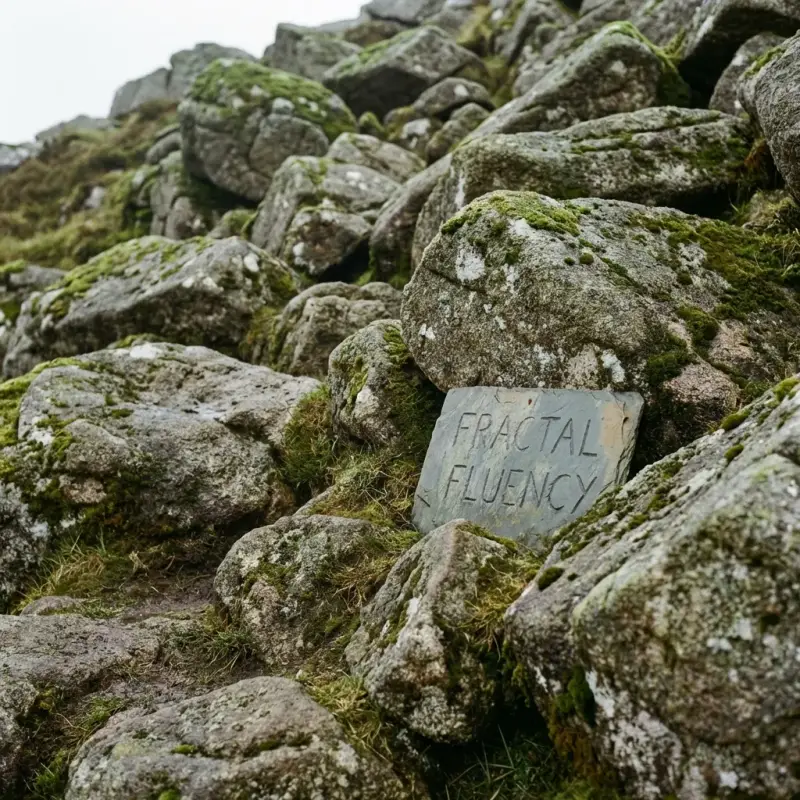
A beautifully arranged mosaic of stones demonstrating fractal fluency, naturally drawing the eye without causing cognitive strain.
2. Circadian Zoning
The garden should adapt to your biological clock:
- Morning Zone (Cortisol Awakening): East-facing. White granite surfaces. They reflect a massive amount of blue-spectrum morning light right into your retinas to tell your brain to wake up.
- Evening Zone (Melatonin Onset): West-facing “Cave” nooks. We train canopy trees like Weeping Beech to filter out the vast majority of neighborhood sky-glow.
- Biorhythmic Lighting: Connected to your wearable data. If your HRV (Heart Rate Variability) says you’re stressed to the gills, the garden’s lights automatically dip to a dim amber (1800K).
Pro Tip: If you can’t install a full bio-synced smart lighting system, simply swapping your outdoor patio bulbs to 1800K amber LEDs will immediately help reduce evening cortisol spikes.
3. Phyto-Sensing Plants
Psychologists love the term “Soft Fascination.” It simply means something that holds your attention without you having to work for it. Here’s how we build the “Breathing” Garden:
- Aspen / Bamboo: They catch micro-breezes. The shimmering leaves are basically visual “Pink Noise” 3.
- Living Indicators: Looking ahead to the end of 2026, we’re testing speculative hydration-sensitive ground covers. They shift color if the air gets too dry or polluted. The garden becomes its own diagnostic tool.
| Species | What it actually does for your brain | Where it goes |
|---|---|---|
| Japanese Maple (‘Bloodgood’) | Visual Anchor. High fractal dimension. | Dead center for meditation. |
| Hakone Grass (Hakonechloa) | Flow State. Constant movement. It softens those harsh, rigid hardscaping lines that stress you out. | Spilling over the pathway edges. |
| Star Jasmine | Olfactory Trigger. Releases linalool (a natural plant compound). Drops your blood pressure almost instantly 4. | Hung right over the Decompression Gate. |
The Climax: The Decompression Gate (Torii 2.0)
Every threshold in a garden is a psychological reset button. The old Torii gate separated the secular from the sacred. Our modern Decompression Gate separates you from your digital life.
It’s a specialized arbor using immediate Haptic Feedback.
- Texture Transition: The floor goes from smooth interior tile directly to rough cobblestone.
- Compression: The overhead beam sits uncomfortably low at 6 feet. You physically have to bow your head to get through. A gesture of humility that forces a mindset shift.
- Acoustic Shadow: The gate walls are packed with acoustic felt or dense moss. The moment you step in, the neighborhood noise just vanishes. It’s startling.
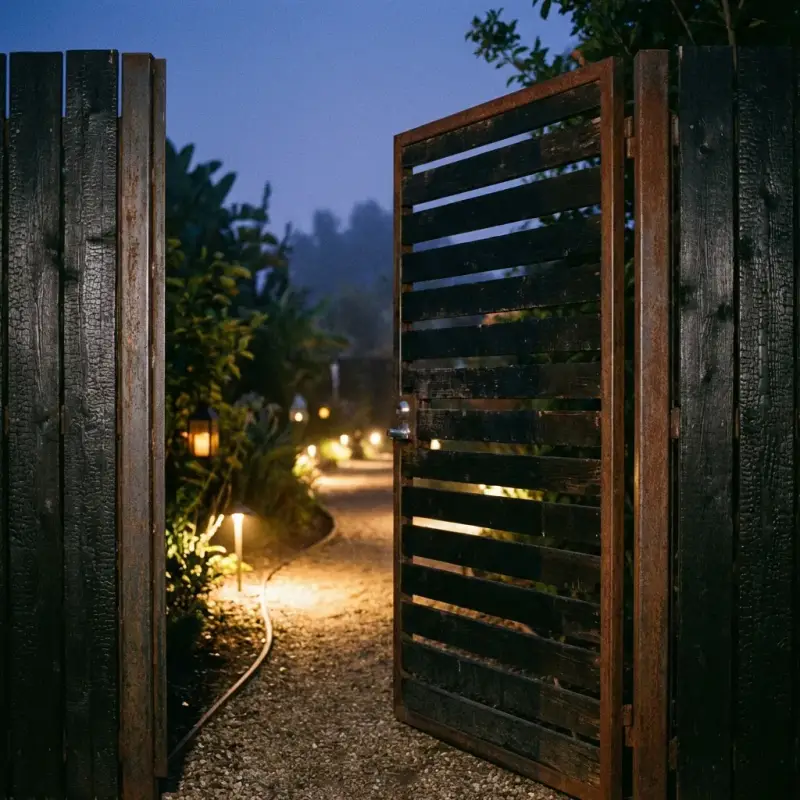
A first-person perspective entering a low, narrow wooden arbor. The transition from smooth tile to rough cobblestone creates immediate haptic feedback.
The Resolution: The Garden as Medicine
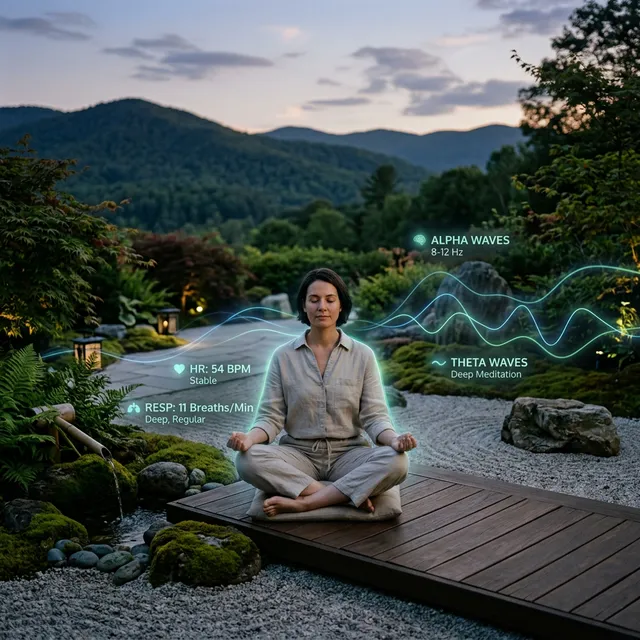
A beautifully composed scene of a person meditating in a high-tech natural Zen garden, with glowing biological data confirming deep neurological relaxation.
Stop treating the garden like a pretty backdrop for your Saturday barbecues. It’s a biological tool. By taking the ancient intuition of Zen masters and integrating it with precise neuroscience, we’re building spaces that actually fix us.
The architecture knows your biology better than you do. Time to let it work.