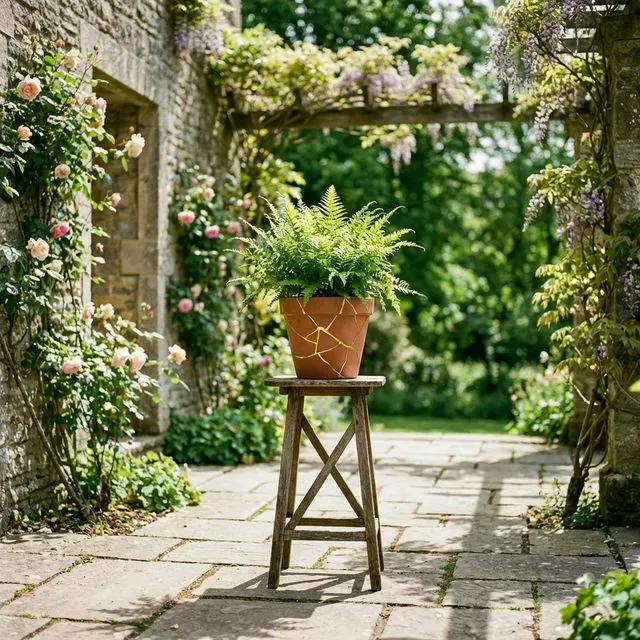
Kintsugi for Gardeners: How to Repair Broken Pots with Gold
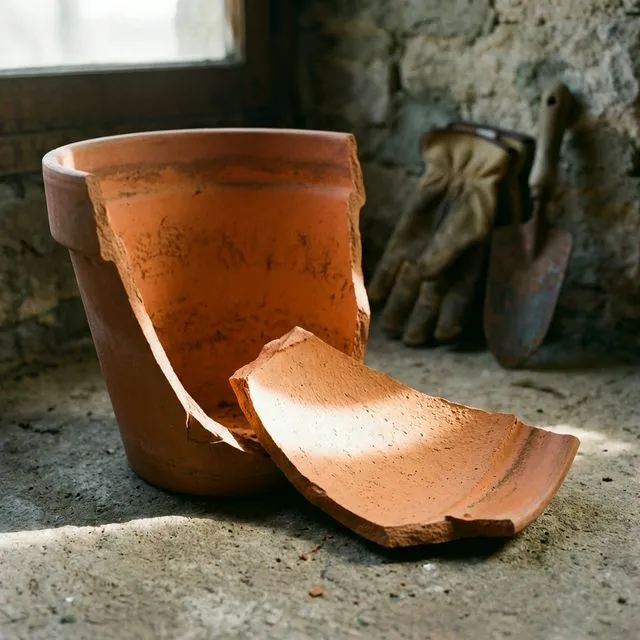
There’s a sickening sound that every gardener knows.
CRASH.
You freeze. You look down. Your favorite handmade terracotta pot—the one you lugged all the way back from Tuscany, or maybe just the perfect shade of “burnt sienna” you finally found at Lowe’s—is in shards on the concrete.
Your instinct is to swear. Then, you reach for the broom.
Don’t.
If you throw that pot away, you’re not just wasting money (though, let’s be honest, good pots are expensive). You’re wasting a chance. This isn’t garbage. It’s an opportunity for Kintsugi—the Japanese art of repairing broken pottery with gold. (See also: The Art of Wabi-Sabi for more on the Wabi-Sabi philosophy).
Wait. Before you roll your eyes—“Great, another Pinterest trend”—hear me out. This isn’t about making a flawless museum piece. This is about taking something broken and making it stronger, weirder, and infinitely cooler than it was before. It’s about not giving up on the things (and plants) we love just because they have a few cracks.
Forget the delicate teacups you see on Instagram. We’re doing this garden-grade. Because a pot holding 20 pounds of wet soil and fighting off squirrels needs a hell of a lot more than just good vibes and superglue.
The “Safety” Elephant in the Room (Read This First)
Most Kintsugi guides are for decorative bowls. If you use those methods on a planter growing your basil, you might be in trouble.
Here’s the reality check no one talks about: Toxicity.
Standard epoxy resin is chemical gunk. When it cures, it’s mostly inert, but do you really want those chemicals leaching into the soil of your edibles? Probably not.
If you are repairing a pot for decorative plants (succulents, ferns, snake plants), standard epoxy is fine. The plant doesn’t care.
If you are repairing a pot for edibles (herbs, tomatoes, peppers), you have two choices:
- Use a Certified Food-Safe Epoxy: Hard to find, expensive, and often tricky to work with.
- The “Liner Hack” (Recommended): Repair the pot with standard strong epoxy for structure. Then, use a plastic nursery pot inside the repaired pot. The roots never touch the glue. The beautiful Kintsugi pot becomes a “cachepot” (a decorative cover). It’s safer, easier, and honestly, better for drainage anyway.
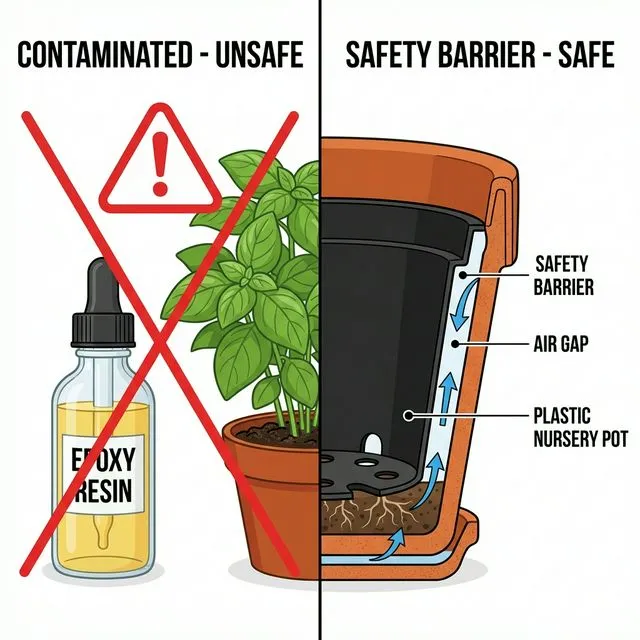
Now that we aren’t poisoning the basil, we can stop worrying about “food-safe” certifications and focus on what matters: Strength. Since the liner handles the safety, we can use the good stuff to hold the pot together.
Crucial Drainage Note: Because you now have a plastic pot inside a sealed ceramic pot, water has nowhere to go. Treated this like a “cachepot.” Take the inner liner out to water it in the sink, or risk drowning your roots in a swamp.
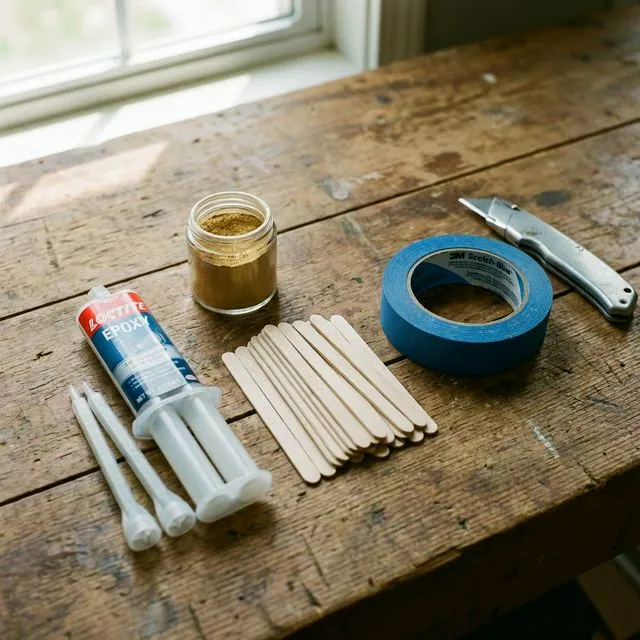
What You Actually Need (No Fluff Material List)
Forget the $100 “authentic” kits. You’re not fixing a Ming vase. You’re fixing a flower pot. Here’s the practical list.
-
Two-Part Epoxy Resin: Get the 5-minute set type. You don’t want to be holding shattered pieces together for an hour. Gorilla Glue Epoxy or JB Weld ClearWeld works great (both have ~3900 PSI tensile strength, which is overkill but good).
-
Mica Powder (Gold): This is the magic dust. A $10 jar will last you a lifetime. Note: This is not craft glitter. Glitter is plastic chunks; mica is a fine mineral pigment. Don’t use your kid’s art supplies.
-
Popsicle Sticks & Paper Plate: For mixing. Do not use your good spoons. Seriously. My partner is still mad about the teaspoon incident of 2019.
-
Painter’s Tape: The blue stuff. This is your third hand.
-
Razor Blade: You will make a mess. This cleans it up.
The Process: From Shards to Gold
1. The Prep (Don’t Skip This)
Clean the shards. If there’s old dirt or moss on the broken edges, the glue won’t stick. Scrub them with a toothbrush and let them dry completely. Do this in a well-ventilated area (open a garage door) because 5-minute epoxy smells like a chemistry lab explosion.
Warning: Use a hair dryer if you’re impatient. If the terracotta is damp, the epoxy will fail. Period. The clay must be bone dry.
Temperature Check: Don’t do this in a freezing garage. Epoxy hates the cold. If it’s below 60°F, the glue might never cure, and you’ll just have a sticky, sad mess.
2. The Mix
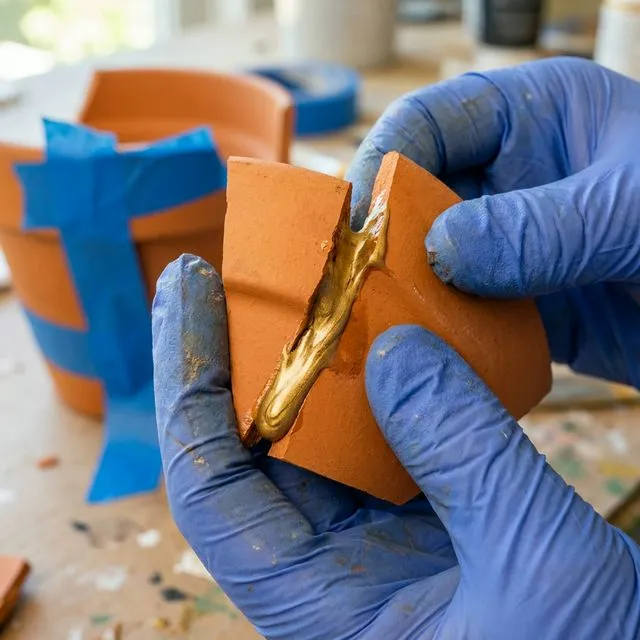
Squeeze out equal parts of Resin and Hardener onto your paper plate. Now, add a tiny scoop of Gold Mica Powder. You want it to look like liquid metal. Mix it thoroughly.
The clock is ticking. You have exactly 5 minutes before this goop turns into a rock. Don’t check your phone. Don’t scratch your nose. Move with purpose.
Panic Button: If you get epoxy on your skin, wipe it off immediately with a paper towel soaked in isopropyl alcohol (rubbing alcohol). Soap won’t touch it until it’s cured, and by then it’s too late.
3. The Join
Apply the gold goop to one edge of the shard. Press it firmly against its neighbor. You don’t need a ton of glue—just a thin bead. Hold it. Count to 60. If it’s a big heavy piece, use the Painter’s Tape to strap it in place while it cures. Don’t try to glue the whole pot at once. Do two pieces. Let them set. Then add the next. It’s a puzzle, not a race.
4. The “Wabi-Sabi” Cleanup
You want the gold to show. In fact, you want a raised “scar” of gold. If you were messy (you were), wait about 20-30 minutes until the glue is rubbery but not hard. Take your razor blade and trim off the excess that drifted too far, but leave the line over the crack.
This is the psychological pivot. You aren’t hiding the break; you are honoring it. The scar isn’t a mistake—it’s the most valuable part of the pot.
Durability: Will It Hold water?
Maybe. If you did a good job, epoxy is waterproof. But terracotta is porous. Water wicks through the clay itself. Over time, hydrostatic pressure can push water behind the glue bond. For Outdoor Pots: Keep them in a sheltered spot. UV light turns clear epoxy yellow and brittle over a few years. For Indoor Pots: They’ll last forever.
The Philosophy of the Broken Garden
There’s a reason this hits different. Gardening is already about failure. Plants die. Squirrels dig up bulbs. Droughts happen. We don’t quit; we replant. repairing a pot is the same refusal to give up. It’s an act of defiance against the disposable culture that says, “It’s broken? Trash it.” No. It’s broken? Fix it. Make the break the most beautiful part. Your garden isn’t perfect. Your pots shouldn’t be either.