The Desktop Zen Garden Reimagined: Designing a Micro-Sanctuary
The Modern Micro-Sanctuary: Reclaiming Peace with Botanical Bento Designs
Beyond the Rock Garden: Why Your Backyard Is Dead
The sprawling backyard is extinct. Good riddance.
In its place, the high-density urban environment has given rise to something far more interesting: the Zen Garden Micro-Sanctuary.
Let’s be real for a second. We aren’t “landscaping” anymore. We’re zoning. We’re fighting for every square inch of restoration we can get. The old way—ornamental viewing gardens that you stare at through a window—is dead. We need immersive wellness sites. We need to reclaim mental clarity from the digital noise1, and we need to do it in spaces smaller than a parking spot.
The modern micro-sanctuary isn’t about size. It’s about precision. Whether you’re working with a 4x4 balcony or a postage-stamp courtyard, the rules are the same: rigorous intent, sensory layering, and invisible tech. Think of your outdoor space as a “Botanical Bento”—a container for tranquility that works harder than a lawn ten times its size.
The “Botanical Bento”: Or, How to Stop Making a Mess
Here’s the thing about small spaces: they punish mistakes.
The most effective strategy I’ve found for high-density living is the Botanical Bento Garden Layout. Just as a traditional bento box partitions a meal into balanced, distinct compartments, this philosophy compartmentalizes your limited footprint into functional “rooms.”
Stop trying to shove a forest into a shoebox. It looks cluttered. It feels anxious.
Toru Mitani’s work at Harvard GSD on excavating space within Tokyo’s dense urban fabric demonstrates that spatial composition isn’t just about the dirt you stand on. It’s about how you manage the raw volume of air and light trapped within a city block.2 Even a sliver of space can possess Yugen—profound, mysterious depth—if you stop overstuffing it.
The 60:30:10 Bento Rule (Memorize This)
To achieve balance without the clutter, use this ratio. It’s borrowed from classic interior and modern exterior design, but it translates perfectly to the micro-garden.
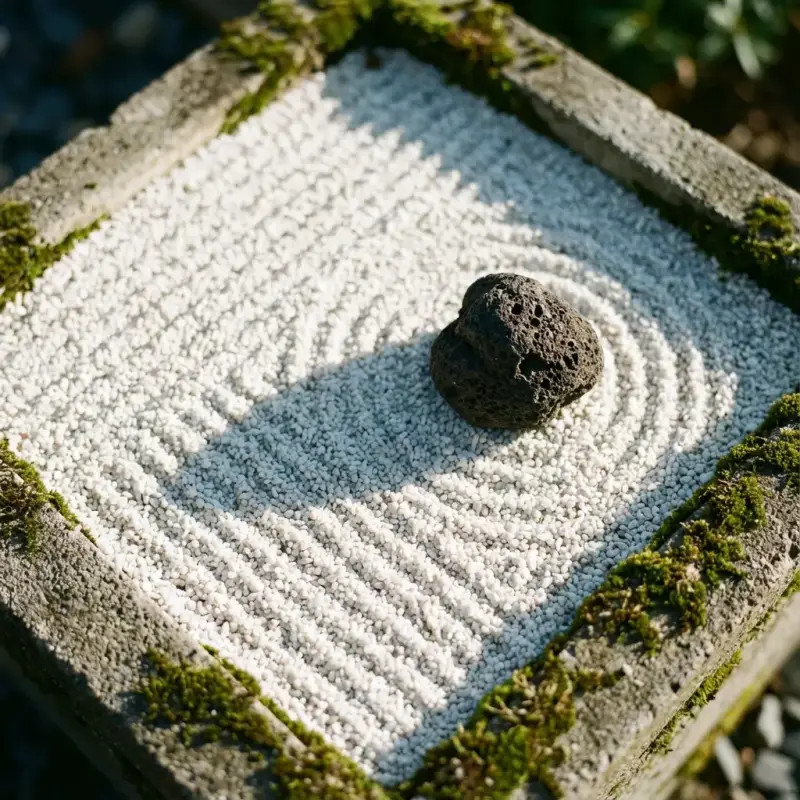
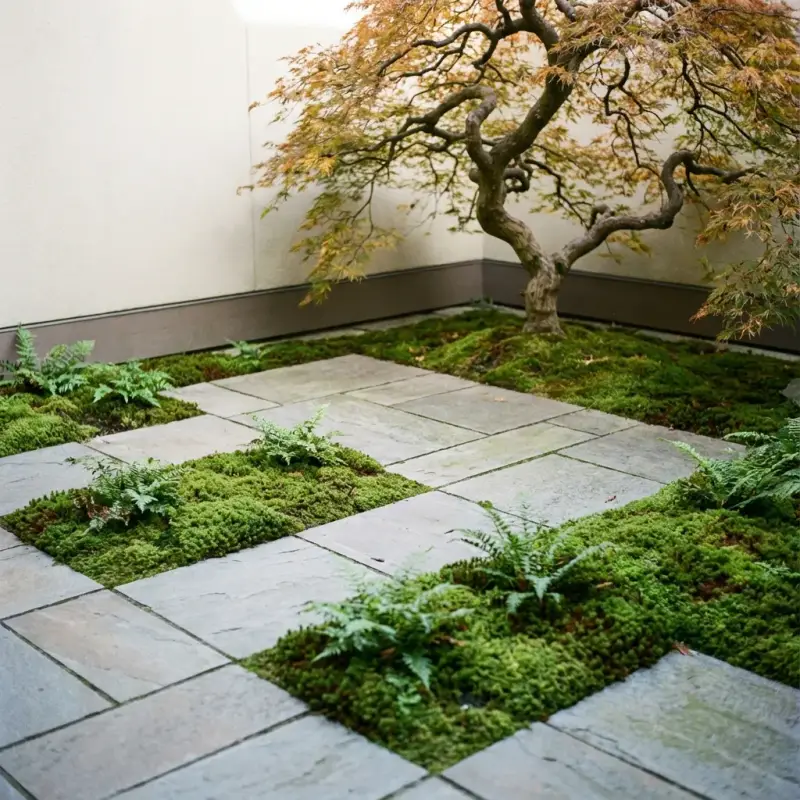
- 60% Grounding (Negative Space): This is your Ishi-gumi foundation. Fine gravel, sand, or a low-profile moss carpet. This is the “silence” that lets everything else shut up for a minute.
- 30% Structure (Hardscaping): The “walls” of your bento. Your deck platform, a single statement boulder, or vertical slat fencing.
- 10% Life (Accent Planting): Native Keystone Species only. Don’t go buying random exotics that will die in a week.
Follow this, and you avoid the “polka-dot effect”—that rookie mistake where you scatter small, unrelated plants everywhere. It’s visual noise. We don’t want noise; we want Seijaku (energized calm). We want a vignette that feels larger than it is because your eye actually has a place to rest.
Stone vs. River Rock: Pick One
The “bones” of your sanctuary are stone. In a small space, texture is magnified, leaning heavily into the aesthetic of Shibui (understated beauty). You have a choice: the “dry ocean” of crushed granite or the “riverbed” of polished stone.
This isn’t aesthetic. It’s functional.
- Granite (Crushed): Sharp. Angular. It holds rake lines perfectly. If you want active meditation (raking), get this. It’s high maintenance (leaves get stuck), but it looks incredible.
- River Stone (Polished): Smooth. Rounded. It’s soft underfoot. It doesn’t hold rake lines, but it feels amazing to walk on. If you want a tactile sanctuary, this is it.
Specify your intent before you buy heavily. Nothing is worse than raking river stones.
Smart Zen Lighting: If I See the Bulb, You Failed
True Zen removes distraction. And honestly? Technology should be invisible.
Smart Zen Garden Lighting isn’t about flashing LEDs or app gimmicks. It’s about systems that enhance the atmosphere without screaming “I bought this on Amazon.”
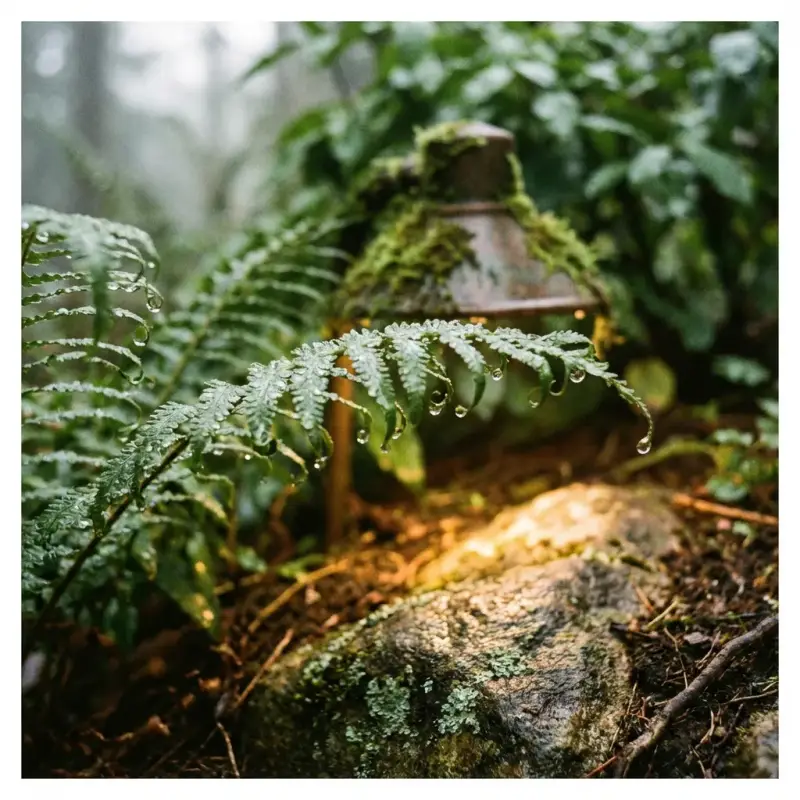
Lighting is about layering. A motion-sensor landscape isn’t just security; it’s theater. Imagine walking onto your balcony at twilight. A warm, 2700K backlight slowly fades up behind a slate monolith. No switches. No apps. It just welcomes you. That’s the goal.
The Technical Setup (Don’t Mess This Up)
- Kelvin Matters: strictly 2700K - 3000K (Warm White). If you use anything cooler (4000K+), you’re introducing blue spectrum light that suppresses melatonin.3 You’re building a stress machine, not a sanctuary.
- Zoning-Based Automation: Use smart relays to separate three zones:
- Path/Safety (Always ready).
- Feature/Focus (Triggered by presence).
- Perimeter/Depth (Sunset timer).
- The “Moonlighting” Effect: If you have a tree, mount a downlight high above it. Cast dappled shadows. It mimics moonlight, which signals “safety” to our primal brains.
Fragrance Stacking: The Layer You Forgot
You’ve dialed in the visual structure and you’ve anchored the circadian lighting. Great. But if you stop there, you’re only hacking half your nervous system. What about the nose?
“Fragrance Stacking” is purpose-driven gardening at its most refined. It’s the difference between a garden that looks nice and one that actually changes your brain chemistry.
Horticulturists and sensory design experts refer to this as “phenological layering.”4 Basically: deliberately staggering bloom times and scent profiles so the garden smells different depending on the time of day and the season.
The Stacking Strategy
Don’t just plant lavender and call it a day.
| Layer | Plant Type | The Trigger | Why You Need It |
|---|---|---|---|
| Base Note | Creeping Thyme / Sugi (Cedar) | Touch / Friction | Grounding. It releases scent when you walk on it. Earthy. Permanent. |
| Heart Note | Lavender / Gardenia | Sun / Heat | Relaxation. Mid-day release. This is the heavy lifter for stress reduction. |
| Top Note | Night-Blooming Jasmine / Moonflower | Dusk / Cool Air | Transition. Active in the evening. It tells your brain: “Work is over. Stop thinking about emails.” |
Placement (Ishi-gumi for Living Things)
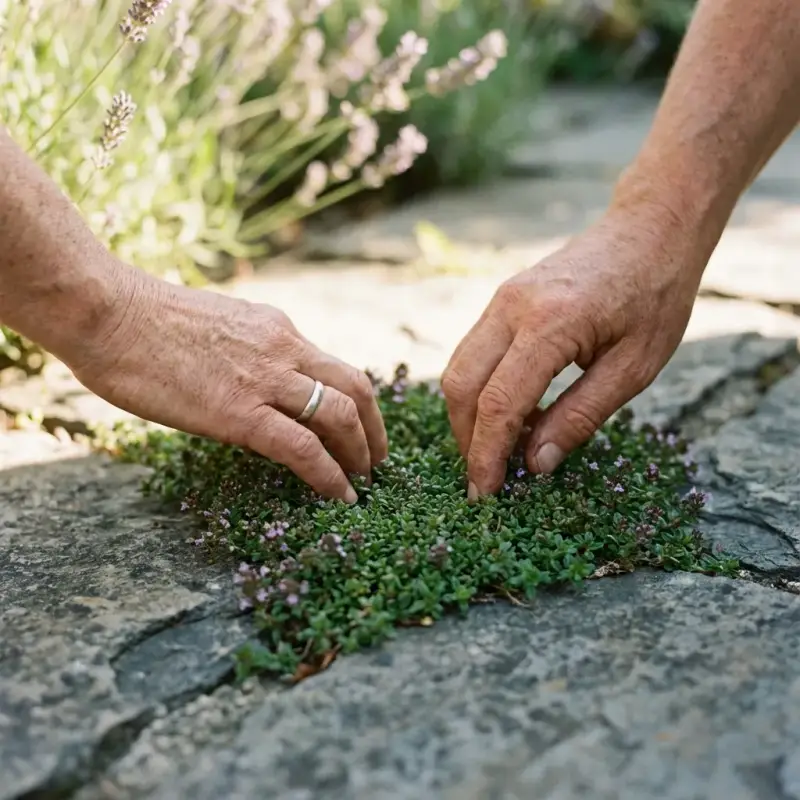
Don’t hide the fragrant stuff in the corner. Put the Base Note (thyme) between your stepping stones. Put the Top Note (Jasmine) right next to your chair.
This isn’t decoration. Hoichi Kurisu’s philosophy centers on gardens as healing tools 5. The arrangement itself is the medicine.